
RESERVES AND RESOURCES ESTIMATION
Discipline: Global
Level: Basic
Duration: 1 day
Instructor(s): Jesús Sotomayor, Horacio Stigliano
Purpose
In the Exploration and Production (E&P) of the Oil and Gas (O&G) companies the estimation of reserves and resources are the key on their financial status impacting the shareholders participation and their future cash flow performance and burrowing capacity for future activities.
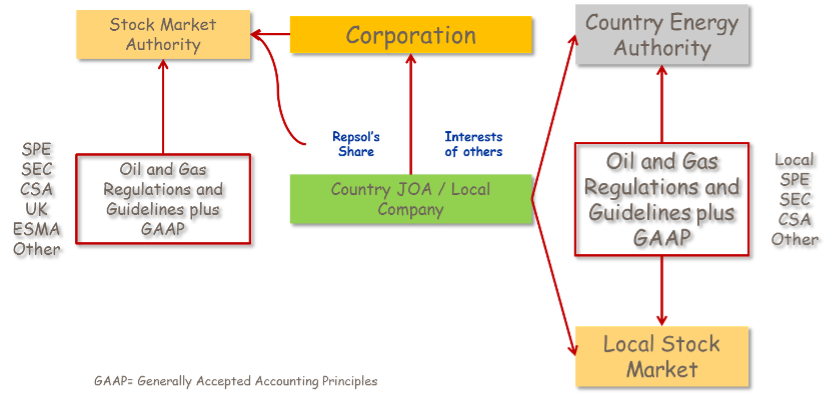
The content of this course starts with an introduction to explain the importance on the control of reserves, the critical role of the corporate governance, the regulatory framework, the definition of oil and gas reserves and the importance to have a technical standard in the industry. The course will be followed to set the overview on the technical standards and how they are related to projects, commerciality and uncertainty. This will be followed by the definitions on resources for exploration prospects and appraisal activities, as well as reserves in development activities. The course will end on describing the reporting system, utilities and description of the consolidated reports.
Designed
Beginners’ geoscientists, geophysics, geology, petrophysics, engineers, reservoir, production.
You will learn
How to:
- Define the Resources and Reserves
- The difference between different Reserves Categories
- The difference between different Resources Categories
- Definition of Production Status
- Levels of Certainty for Reported Reserves
- Requirements for the Classification of Reserves
- Procedures for the Estimation of Reserves
- Report Resources and Reserves
Content
Overview
- Introduction
- Definition of Resources
- Definition of Reserves
- Reserves Categories
Guidelines for Application of Oil and Gas Reserves Definitions
- Uncertainty in Reserves Estimates
- Deterministic and Probabilistic Methods
- Definitions of Resources
- Aggregation of Reserves Estimates
General Requirements for Classification of Reserves
- Drilling Requirements
- Testing Requirements
- Economic Requirements
Procedures for Estimation and Classification of Reserves
- Volumetric Methods
- Material Balance Methods
- Production Decline Methods
- Reserves Related to Future Drilling and Planned Enhanced Recovery Projects
- Verification of Reserves Estimates
Determination of In-Place Resources
- Introduction
- Resource Estimates
- Volumetric Estimates
- Material Balance Estimates
- Procedures for Estimating In-Place Resources
- Sources and Reliability of Data
- Interrelationship of Parameters
- Uses of Resource Estimates
Estimation of Volumes and Hydrocarbon In Place
- Reservoir Area and Volume
- Thickness
- Permeability
- Porosity
- Hydrocarbon Saturation
- Testing and Sampling
- Reservoir Temperature
- Reservoir Pressure
- Gar Formation Volume Factor
- Oil Formation Volume Factor
- Quality and Reliability of Data and Results
- Uncertainty Assessment through Application of Geostatistics
Reporting
- Regulations, Standards and Definitions
- Reserves and Resources recognitions
- Agreements and Contracts
Software applications:
- Microsoft Office
Text and consulting books:
- SEC March 31, 2001 – Division of Corporation Finance: Frequently Requested Accounting and Financial Reporting Interpretations and GuidanceSEC,
- SEC Final Rule – Release 33-8995 – Modernization of Oil and Gas Reporting
- SEC June 30, 2000 – Accounting and Disclosure Issues
- SEC October 26, 2009 – Compliance and Disclosure Interpretations: Oil and Gas Rules
- PRMS November 26, 2011
- SPE February 19, 2007 – Reserves Estimating and Auditing Standards
- SPE December 2010 – Monograph 3 – Guideline for the Practical Evaluation of Undeveloped Reserves in Resource Plays
- WPC
- AAPG
- SPEE
- ESMA
Discipline: Global
Level: Basic
Duration: 1 day
Instructor(s): Jesús Sotomayor, Horacio Stigliano